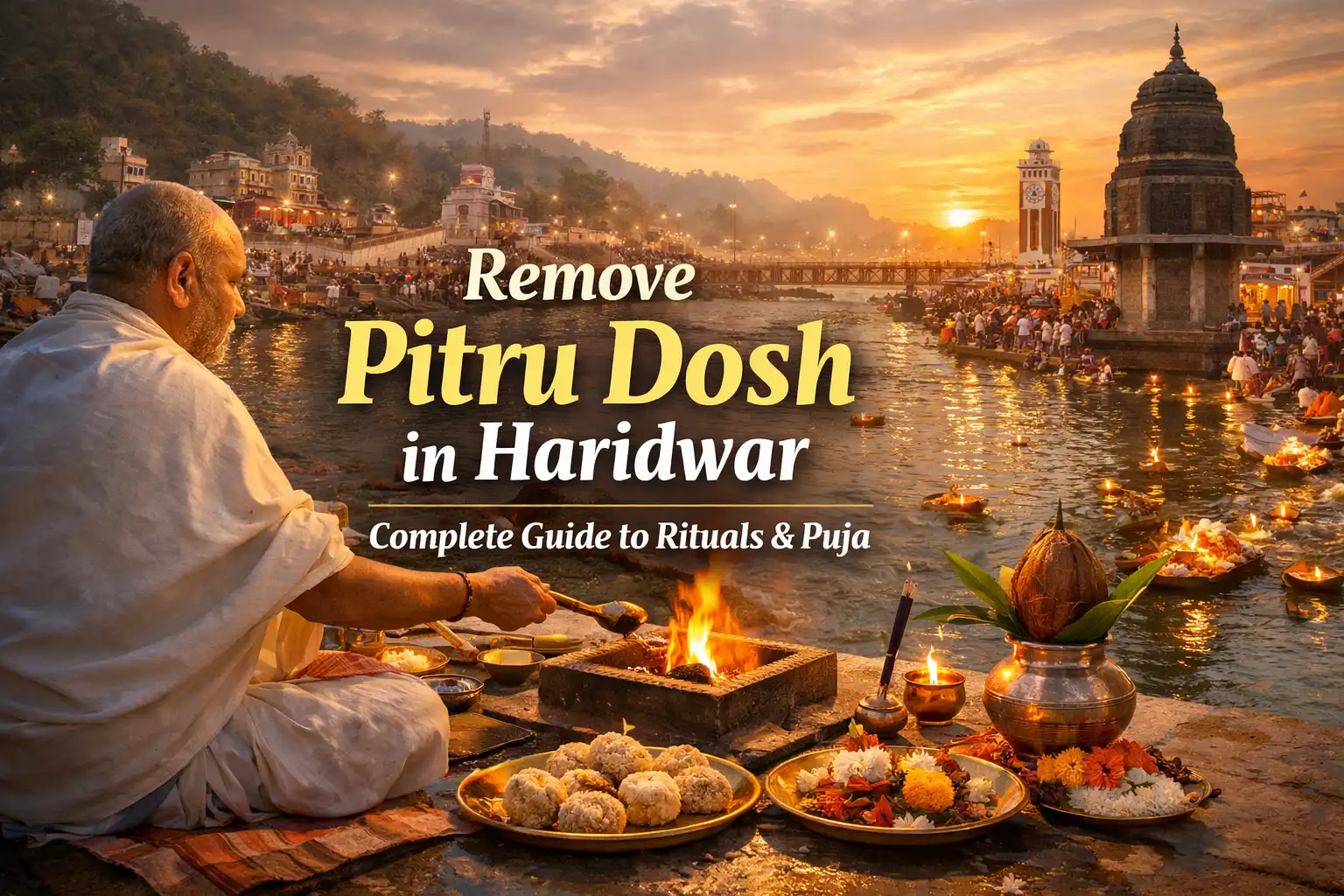
Many families search for ways to remove Pitru Dosh in Haridwar when they begin facing repeated obstacles in life that seem difficult to explain. It may be delays in marriage, problems in childbirth, financial instability, tension at home, or a feeling that despite effort, things do not settle. In Hindu belief, Pitru Dosh is connected to ancestral imbalance or unfulfilled duties toward forefathers, and Haridwar is one of the most respected places to perform the remedies for it.
This is not just about ritual for the sake of ritual. For many people, it is about peace. It is about doing something meaningful for their ancestors, following dharmic tradition, and finding emotional closure along with spiritual relief. And when these rites are performed in a sacred place like Haridwar, on the banks of Maa Ganga, the experience often feels deeper and more complete.
If you are trying to understand the proper solution, this guide will help you. It explains what Pitru Dosh means, why Haridwar is so important, which pujas are performed, and how to choose the best pandit in Haridwar for the ritual.
What Is Pitru Dosh and Why Does It Matter?
In traditional Hindu astrology and spiritual understanding, Pitru Dosh is believed to arise when ancestors are not at peace or when ancestral karmic obligations remain unresolved. It may also be linked to certain planetary placements in a horoscope, especially those associated with lineage, karma, and family blessings.
That said, not every problem in life is Pitru Dosh. This is where many people get confused. Sometimes families hear the term from astrologers without fully understanding what it means. In practice, Pitru Dosh is usually considered relevant when there is a pattern of recurring family difficulties along with indications in the birth chart or a strong recommendation from a knowledgeable priest.
What makes this important is the emotional and spiritual side of it. In Indian households, respect for ancestors is not symbolic alone. It is woven into festivals, shradh rituals, tarpan, and family memory. When those duties are neglected, many believe the effect can be felt across generations.
Why Haridwar Is Considered Sacred for Pitru Dosh Remedies
Haridwar holds a special place in Hindu tradition. It is one of the holiest cities in India, and its connection with the Ganga makes it especially significant for ancestral rites. Families from Delhi, Uttar Pradesh, राजस्थान, Haryana, Punjab, and even from abroad come to Haridwar to perform rituals for peace of the departed souls.
There is a reason for this faith. Har Ki Pauri, Brahma Kund, and other sacred ghats are deeply associated with purification, prayer, and moksha-oriented rituals. The atmosphere itself is different. Early morning chants, the flow of the Ganga, the smell of havan samagri, priests reciting mantras in Sanskrit, and families offering pind and tarpan together create a setting that feels grounded in tradition, not performance.
For people who want to remove Pitru Dosh in Haridwar, the city offers more than convenience. It offers religious authenticity, experienced priests, and a long-standing custom of conducting these karmic and ancestral remedies properly.
Signs That May Indicate Pitru Dosh
People usually start looking into Pitru Dosh when problems repeat despite effort. Of course, every difficulty is not spiritual in nature, but in many families, certain recurring patterns raise concern.
Some commonly mentioned signs include:
- Repeated delay in marriage
- Problems related to childbirth or pregnancy
- Ongoing conflict within the family
- Sudden financial setbacks
- Legal or property disputes that do not resolve
- Lack of peace at home
- Unusual fear, heaviness, or repeated bad dreams involving ancestors
- Family patterns of untimely death or unresolved ancestral grief
These signs are not proof on their own. A proper assessment usually combines family background, astrological guidance, and traditional ritual advice. A knowledgeable priest can explain whether a simple tarpan is enough or whether a more specific ritual is needed.
How to Remove Pitru Dosh in Haridwar
The process to remove Pitru Dosh in Haridwar usually depends on the nature of the dosh, the family’s background, and whether the issue is general ancestral imbalance or something more specific. In many cases, the solution involves a combination of puja, sankalp, tarpan, pind daan, and mantra-based rituals performed under priestly guidance.
Below are the main remedies people commonly perform in Haridwar.
1. Pitra Dosh Nivaran Puja
This is the most direct ritual for ancestral dosh. The puja is performed to seek peace for departed forefathers and to reduce karmic obstacles believed to arise from ancestral dissatisfaction. It generally includes sankalp, invocation of ancestors, mantra chanting, offerings, and in some cases havan.
Many families specifically come for Pitra Dosh Nivaran Puja in Haridwar because it is designed for this very purpose. When done properly, it is believed to help restore family harmony and spiritual balance.
The important part is not rushing through it. A proper puja should be explained clearly to the family. You should know what is being done, why it is being done, and what items are required.
2. Pind Daan Puja
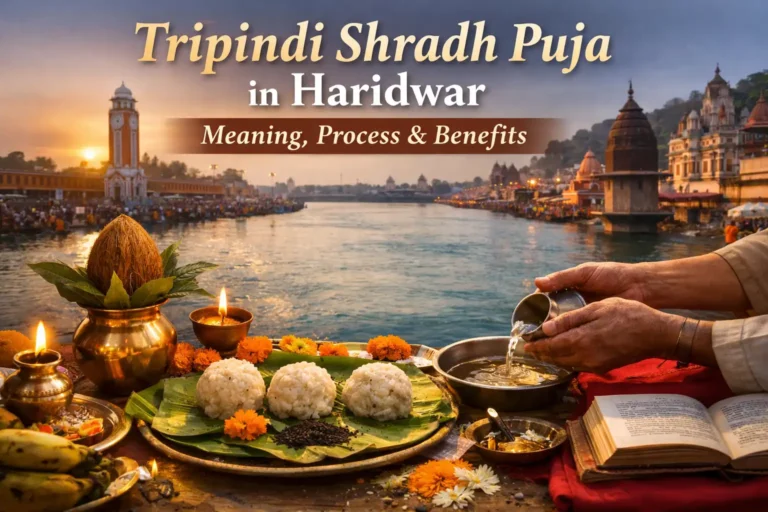
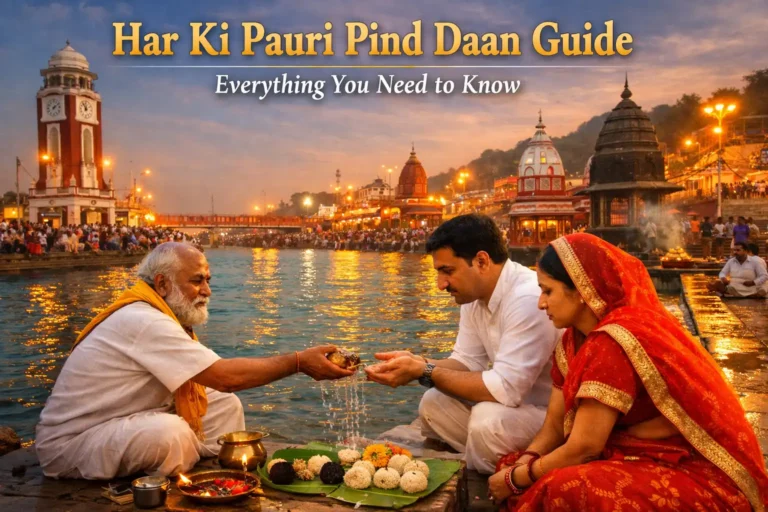
Pind Daan is one of the most respected rites for ancestors in Sanatan tradition. In this ritual, pind, usually made from rice flour, barley flour, black sesame, and other sacred items, is offered for the peace and upliftment of departed souls.
If the concern is related to forefathers not receiving due rituals, Pind Daan Puja in Haridwar is often advised as part of the remedy. Many families choose Haridwar because they want the offering to be made on the banks of the Ganga, which is considered especially auspicious.
This ritual carries emotional weight. For some, it is performed after the loss of a parent or elder. For others, it is done much later, when they realize that ancestral rites were never completed correctly.
3. Narayan Bali Puja
In some situations, Pitru Dosh is believed to be connected with unnatural death, untimely death, or souls not receiving proper release. In such cases, priests may recommend Narayan Bali Puja, a more specialized and significant ritual.
If that is advised, families often choose Narayan Bali Puja in Haridwar as a complete spiritual remedy. This puja is not usually done casually or without reason. It should be performed only under experienced guidance, because the procedure, mantras, and sankalp need accuracy and discipline.
This is why choosing the right priest matters so much. A well-trained pandit will tell you honestly whether this puja is necessary or whether a simpler ancestral remedy is enough.
4. Tarpan and Shradh Rituals
Sometimes the solution is not a large ceremony but a sincere and properly performed tarpan or shradh. Tarpan involves offering water, black sesame, and prayers to ancestors. Shradh is performed as a ritual act of remembrance, duty, and nourishment for the departed.
These rites are especially important during Pitru Paksha, but they can also be performed at other suitable times based on family need, tithi, and priestly advice. Even families who come for a larger remedy often include tarpan as part of the process.
Best Time to Perform Pitru Dosh Remedies in Haridwar
Although these rituals can often be performed throughout the year, some times are considered more spiritually suitable than others.
Pitru Paksha is widely regarded as the most important period for ancestral rites. During these days, many families travel to Haridwar specifically for shradh, tarpan, and pind daan. Amavasya is also considered favorable. In some cases, specific tithis connected to the departed soul are chosen.
Still, not everyone can travel during festival periods. That is completely normal. A good priest will usually guide you on the next suitable date based on your situation. The key is not panic. The key is doing the ritual properly, with faith and correct procedure.
How to Choose the Best Pandit in Haridwar
When people search for the best pandit in Haridwar, they are usually looking for two things: trust and clarity.
That makes sense. Ancestral rituals are sensitive. Families are often emotional, sometimes grieving, and sometimes confused by different advice from different people. So, the right pandit should not simply recite mantras. He should also guide the family with patience and honesty.
Here are a few things worth checking:
Knowledge of Ritual Procedure
The priest should understand the difference between general ancestral rites, Pitru Dosh remedies, Narayan Bali, shradh, and pind daan. Every ritual has a purpose. Mixing them without reason is not helpful.
Clear Communication
A good pandit explains the process in simple language. He tells you what is required, how long it may take, and what the family should bring or observe.
Experience With Outstation Families
Many people visiting Haridwar come from other states and may not know the local process. An experienced priest makes this easier, especially for elderly family members.
Respectful Conduct
This matters more than people admit. Rituals for ancestors should feel dignified, calm, and sincere. Families should not feel rushed or pressured.
Transparent Arrangements
Whether it is samagri, dakshina, ghat arrangements, or the timing of the puja, everything should be discussed clearly in advance.
What Happens During the Puja Process
The exact procedure varies, but a typical Pitru Dosh remedy in Haridwar may include:
- Sankalp in the family’s name and gotra
- Ganga snan or ritual purification
- Invocation of ancestors
- Tarpan with jal and black sesame
- Pind daan if required
- Mantra chanting by the priest
- Havan or shanti ritual in selected cases
- Final prayers for peace, forgiveness, and blessings
In some families, the experience becomes more than a ritual obligation. It turns into a meaningful moment of remembrance. People speak the names of parents, grandparents, and elders aloud. They cry sometimes. They feel lighter afterward. Even those who came with doubt often leave with a sense of emotional completion.
Related Pujas That May Also Be Recommended
Sometimes Pitru Dosh is discussed along with other spiritual or astrological concerns. Depending on the family’s situation, a priest may also advise related rituals in Haridwar such as:
- Kalsarp Dosh Puja in Haridwar
- Manglik or Mangal Dosh Puja in Haridwar
- Navgraha Shanti Puja Havan in Haridwar
However, these should only be considered if there is a genuine reason. Not every dosh needs every puja. A careful and ethical priest will guide you according to need, not fear.
Common Questions People Ask Before Booking
Can Pitru Dosh really be removed in Haridwar?
In spiritual tradition, the remedy is not seen as a mechanical removal but as a sincere effort to bring peace to ancestors and reduce karmic imbalance. Haridwar is considered one of the most sacred places for this work.
How many family members should attend?
Usually, one or more close family members can perform the ritual. In many cases, the eldest son or a male descendant performs it, but depending on family circumstances and priestly guidance, others may also participate.
Is astrology necessary before the puja?
Not always. Some people come based on horoscope guidance, while others come because ancestral rites were pending or family tradition required it.
How long does the process take?
Simple rituals may be completed in a few hours. More detailed pujas, such as Narayan Bali or extended ancestral rites, may require more time.
What should we bring?
Usually basic information such as gotra, names of ancestors if known, and simple traditional clothing are useful. Many puja materials are arranged locally, but it is always better to confirm in advance.
Why Many People Prefer Haridwar Over Other Places
There are many sacred places in India for ancestral rituals, but Haridwar remains one of the most accessible and deeply trusted. For families from North India especially, it is often the first choice. The city combines scriptural importance, established priestly traditions, and practical ease of travel.
There is also something deeply reassuring about performing these rites by the Ganga. People often speak about the sense of surrender they feel there. The ritual becomes less abstract. You are not just reading about remedies. You are standing in a place where generations before you have come for the same purpose.
That continuity matters.
Final Thoughts
If you are looking to remove Pitru Dosh in Haridwar, the most important step is to approach the process with sincerity, patience, and proper guidance. Pitru-related rituals are not only about dosh; they are about remembrance, duty, peace, and the bond between generations.
Haridwar remains one of the most meaningful places to perform these rites because of its spiritual atmosphere, scriptural importance, and experienced priestly tradition. Whether the remedy involves Pitra Dosh Nivaran Puja, Pind Daan, Narayan Bali, or simple tarpan, the goal is the same: peace for ancestors and blessings for the family.
And when you are choosing the best pandit in Haridwar, choose someone who values tradition, clarity, and honesty over pressure or exaggeration. A good ritual should leave you informed, respected, and spiritually settled.
That is what most families are truly looking for.