For many Hindu families, Har Ki Pauri Pind Daan is not just a ritual performed on a riverbank. It is a deeply personal act of remembrance, duty, and prayer for one’s ancestors. People come to Haridwar carrying photos in their phones, names in their memory, and often a quiet sense that something important needs to be done with sincerity.
If you are planning Pind Daan at Har Ki Pauri, you are probably looking for clear answers. What exactly happens there? Why is Har Ki Pauri considered so sacred? Who should perform the ritual? And how do you find the right priest without feeling confused or pressured? These are practical questions, and they deserve simple, trustworthy answers.
This guide is meant for that. It explains the spiritual meaning, the local context in Haridwar, the basic ritual process, and a few things people usually wish they knew before arriving.
What Is Har Ki Pauri Pind Daan?
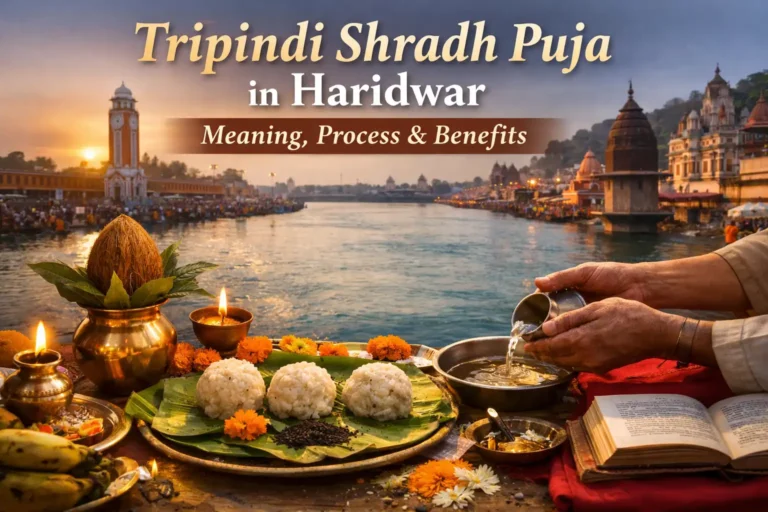
Pind Daan is a traditional Hindu ritual performed for the peace and upliftment of departed ancestors. It usually involves offering pind, made from ingredients such as rice flour, barley flour, black sesame, and other sacred items, along with prayers, sankalp, and tarpan. The intention is to honor those who have passed away and fulfill one’s duty toward them.
When people refer to Har Ki Pauri Pind Daan, they are speaking specifically about performing this ancestral rite at Har Ki Pauri in Haridwar, one of the most revered ghats in India. This gives the ritual an added spiritual significance because Har Ki Pauri is associated with the Ganga, purification, and age-old pilgrimage tradition.
For some families, the ritual is done after the death of a parent or elder. For others, it is part of annual Shradh observance or something that had been delayed and now needs to be completed properly. In either case, it is rarely treated as a formality. Most people come with reverence, and often with emotion too.
Why Har Ki Pauri Is Considered Sacred for Pind Daan
There are many places in India where ancestral rites are performed, but Har Ki Pauri holds a special place in the minds of devotees. The Ganga at Haridwar is not just a river in the ordinary sense. In Hindu belief, it is Maa Ganga, a sacred presence associated with purification, grace, and spiritual release.
Har Ki Pauri, in particular, carries a strong ritual identity. The ghat is known for its daily Ganga Aarti, temple bells, Vedic chanting, and a living tradition of pilgrimage. Families from Delhi, Uttar Pradesh, Rajasthan, Haryana, Punjab, and beyond come here because they believe that prayers offered at this place reach with greater sanctity and depth.
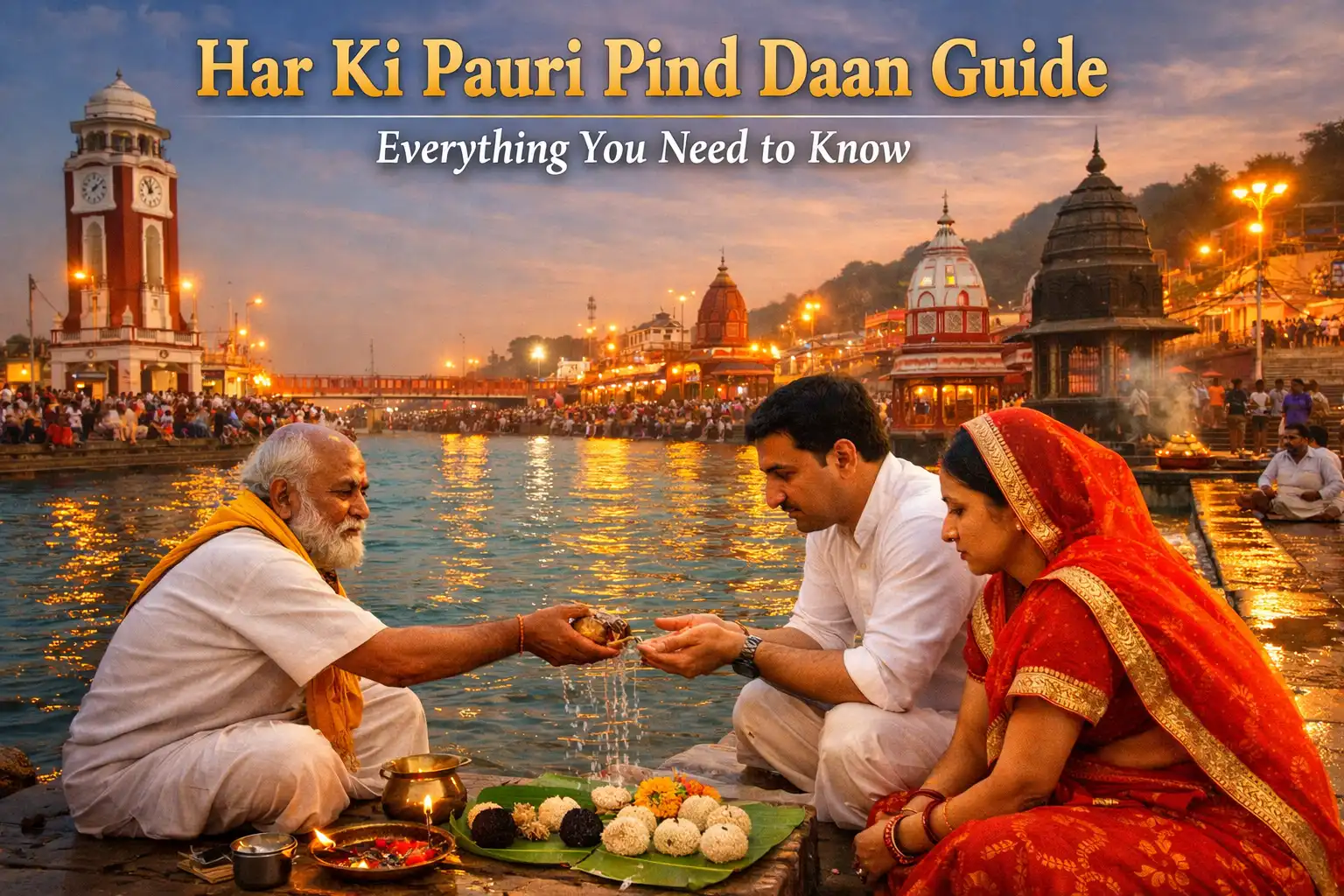
There is also something about the atmosphere that stays with people. Early morning at the ghat feels very different from reading about the ritual online. Priests sitting with kusha grass and ritual plates, the cool air coming off the water, families speaking softly as they remember names from past generations, the sound of mantras mixed with the river’s flow — all of it creates a setting that feels serious and rooted.
That is one reason many choose Pind Daan Puja in Haridwar instead of performing the rite in a less traditional setting.
Who Should Perform Pind Daan at Har Ki Pauri?
Traditionally, Pind Daan is performed by a son or male descendant of the departed. In many families, the eldest son takes this responsibility. However, life does not always fit neatly into ideal structures. Families today may have different circumstances, and priests often guide accordingly.
If there is no son, or if the closest relative available is someone else in the family, the priest may advise how the rite can still be done properly. In such situations, it is best not to rely on assumptions. A knowledgeable priest can guide based on family background, sampradaya, and practical realities.
It is also common for more than one family member to attend, even if one person performs the main offerings. Elderly parents, siblings, and younger family members often sit nearby or take part in the prayers. In many cases, the ritual becomes a shared family moment rather than an individual act.
Best Time for Har Ki Pauri Pind Daan
The timing of Pind Daan matters. At the same time, the answer is not always as rigid as people think.
Pitru Paksha
Pitru Paksha is the most widely known and spiritually significant period for ancestral rituals. During these days, families perform Shradh, Tarpan, and Pind Daan for their forefathers. Haridwar becomes especially active during this period, with many pilgrims arriving specifically for such rites.
If you are able to travel during Pitru Paksha, it is often considered the most auspicious time for Har Ki Pauri Pind Daan.
Death Tithi and Amavasya
The death tithi of the departed person is another important date. Many families prefer to perform annual ancestral offerings on that specific lunar day. In some traditions, Amavasya also carries special importance for tarpan and related rituals.
Can It Be Done on Other Dates?
In genuine circumstances, yes, it may be done on other suitable dates as advised by a priest. Sometimes families miss Pitru Paksha because of illness, travel issues, financial limitations, or simply a lack of awareness. In such cases, a proper priest may select another appropriate day instead of telling the family to postpone indefinitely.
The key point is this: timing should be guided, not guessed. A ritual like this deserves better than random convenience.
Step-by-Step Process of Pind Daan at Har Ki Pauri
The exact procedure varies slightly depending on family tradition and the priest conducting the rite, but the general structure is often similar.
1. Sankalp
The ritual begins with sankalp, where the person performing the puja states the intention of the ritual, along with name, gotra, and the names of the departed ancestors if known.
2. Preparation of Ritual Items
The priest arranges the required samagri. This may include rice flour or barley flour, black sesame, flowers, kusha grass, water, cloth, and offerings used to make the pind.
3. Tarpan
Water mixed with sesame is offered with prayers for the ancestors. This is one of the most moving parts of the ritual because it directly expresses remembrance and reverence.
4. Pind Offering
The pind is prepared and offered according to Vedic procedure. The priest chants mantras, and the person performing the ritual follows the instructions step by step.
5. Final Prayers
The ritual concludes with prayers for peace, liberation, and blessings for the family. Depending on the custom, there may also be dakshina, feeding of cows, birds, or Brahmins, or other concluding observances.
What matters most is not speed. A meaningful ritual should not feel rushed. A good priest will explain the process calmly and make sure the family understands what is being done.
What to Bring for the Ritual
Many families worry about what they need to carry from home. In practice, much of the puja samagri can usually be arranged locally in Haridwar, but a few things are still useful to keep ready.
You should ideally have:
- Names of the departed ancestors, if known
- Gotra details, if known
- Simple traditional clothing
- A towel and extra clothes if you plan to take a dip in the Ganga
- Any specific family instruction given by your priest
- Basic drinking water and light essentials for elderly family members
If you are coming with parents or senior relatives, plan the morning carefully. Har Ki Pauri can get crowded, especially in peak ritual seasons. Comfortable footwear, easy access to the ghat, and a little extra time make a real difference.
How to Choose the Best Pandit in Haridwar
This is one of the most practical concerns, and honestly, one of the most important. When people search for the Best Pandit in Haridwar, they are usually trying to avoid confusion. They want someone experienced, respectful, and clear about the ritual.
A good priest should do more than perform mantras quickly. He should explain whether Pind Daan alone is required, whether tarpan is enough, or whether another related ritual should also be considered.
Here are a few signs of a trustworthy priest:
Knowledge and Clarity
He should know the difference between Pind Daan, Shradh, Tarpan, Narayan Bali, and Pitru Dosh-related remedies.
Calm Communication
A good priest explains the process without making the family anxious or overwhelmed.
Respect for Tradition Without Pressure
He should guide the ritual properly, but not create fear to push unnecessary ceremonies.
Practical Help for Visiting Families
Many outstation families need help with timing, location, and basic arrangements near Har Ki Pauri. An experienced local priest understands that.
In the end, the Best Pandit in Haridwar is not the one who speaks the most. It is the one who guides the family with knowledge, sincerity, and patience.
Practical Tips Before Visiting Har Ki Pauri
A little preparation can make the visit much smoother.
Try to reach early in the day. The area is calmer in the morning, and rituals usually feel more focused before the larger crowds build up. If you are visiting during Pitru Paksha or a festival period, expect a busier environment and allow extra time.
Dress simply and respectfully. Avoid carrying too many valuables. If elderly family members are coming, arrange transport that drops you as close as possible to the ghat.
It also helps to mentally prepare for the emotional side of the ritual. Many people think they will just “complete a puja,” but once the names of parents or grandparents are spoken during the ritual, the moment can feel unexpectedly personal. That is normal.
Related Rituals Families Often Ask About
People who come for Pind Daan at Har Ki Pauri sometimes also ask about related rituals. These are not always necessary, but they may be relevant in specific situations.
For example, some families also inquire about Pitra Dosh Nivaran Puja in Haridwar if there are concerns related to ancestral imbalance or unresolved family patterns. Others may ask about Narayan Bali Puja in Haridwar when there is a belief that special rites are needed for untimely or unnatural death.
Similarly, people sometimes explore Kalsarp Dosh Puja in Haridwar, Manglik or Mangal Dosh Puja in Haridwar, or Navgraha Shanti Puja Havan in Haridwar. These are separate rituals with their own purpose and should only be done when there is a genuine reason.
That is another reason why proper priestly guidance matters. Not every ritual belongs in every case.
Why Har Ki Pauri Leaves a Lasting Impression
There are places that are spiritually important, and then there are places that people remember for life. Har Ki Pauri often becomes the second kind.
Part of it is faith. Part of it is atmosphere. And part of it is the simple fact that when you perform a rite for your ancestors beside the Ganga, in a place where generations have come for the same purpose, the experience feels connected to something older and larger than your own life.
That feeling cannot really be captured in a checklist. But it is one reason families return to Haridwar, and one reason this ghat continues to hold such importance for ancestral rituals.
Final Thoughts
Har Ki Pauri Pind Daan is not just a religious procedure. It is an act of respect, lineage, memory, and spiritual responsibility. For many families, it becomes a deeply meaningful moment — not because it is elaborate, but because it is sincere.
If you are planning the ritual, focus on a few essentials: understand the purpose, choose a suitable date, come prepared, and seek guidance from a knowledgeable priest. The goal is not to make the process complicated. It is to do it properly, with faith and calmness.
Haridwar, and especially Har Ki Pauri, remains one of the most trusted places for this because it brings together sacred geography, tradition, and lived ritual culture. And when guided by the Best Pandit in Haridwar, the experience can feel clear, dignified, and spiritually complete.
That is what most families are really searching for. Not just information, but reassurance that they are doing something important in the right way.