
Can a Woman Perform Pind Daan? This is one of the most heartfelt questions many families ask, especially when they are dealing with loss, responsibility, and tradition at the same time. It often comes up in real situations, not abstract debates. A daughter loses her parents and wants to do what is right. A widow wishes to perform final duties for her husband. A family has no son. Someone is ready to travel to Haridwar and wants clarity before standing at the ghat with folded hands and a heavy heart.
The question matters because Pind Daan is not seen as a casual ritual in Hindu tradition. It is tied to memory, dharma, gratitude, and the spiritual peace of departed ancestors. At the same time, Hindu customs are not always uniform across every region, sampradaya, and family line. What is practiced in one home in Bengal may differ from what is followed in a family from Uttar Pradesh, Maharashtra, Tamil Nadu, or Rajasthan. So the honest answer is not a flat yes or no without context.
Still, one thing is clear: many respected Hindu traditions do allow women to perform Pind Daan in certain circumstances, especially when they are the ones carrying the responsibility with sincerity and there is no closer male heir available, or when the family priest permits it based on custom and scripture-based interpretation. In a sacred place like Haridwar, where countless families come for ancestral rites, this question is no longer rare. It is very real, very personal, and worth answering carefully.
What Is Pind Daan and Why Is It Performed?
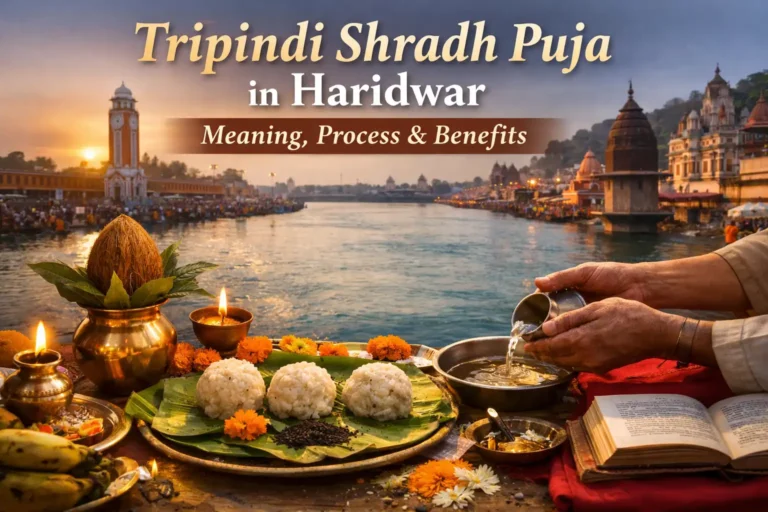
Pind Daan is a sacred Hindu ritual offered for the peace of departed souls. In this ceremony, pindas, usually symbolic offerings made from rice flour, barley flour, sesame, and other ritual items, are offered with mantras and devotion. The purpose is to express gratitude toward ancestors and pray for their spiritual peace.
The spiritual meaning of Pind Daan
In Hindu belief, the bond between the living and the departed does not end with death. There remains a duty of remembrance. Pind Daan is one way of fulfilling that duty. It is performed so that the soul of the departed receives peace, blessings flow through the family line, and ancestral responsibilities are not left incomplete.
This is why the ritual is treated with seriousness. For many families, it is not only about religious correctness. It is about love, duty, and closure. When a person offers Pind Daan for a parent, there is emotion behind every mantra and every offering.
Why families perform it in Haridwar
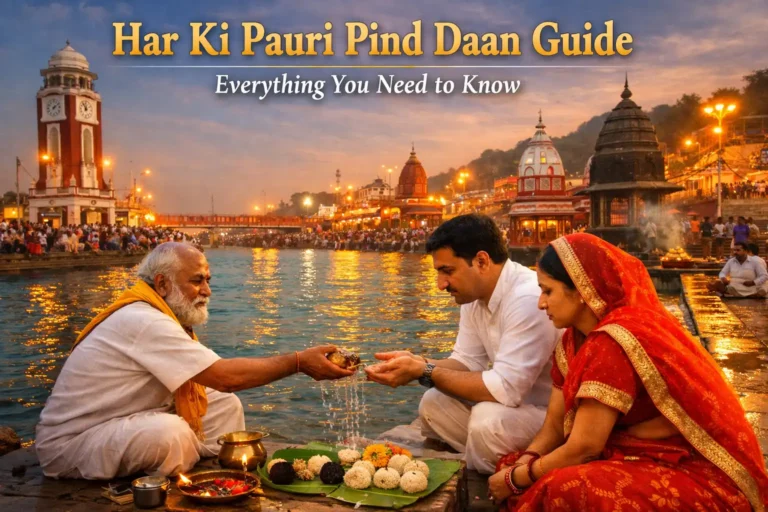
Haridwar holds special significance because the city is one of the most sacred places for ancestral rituals. The presence of Maa Ganga, the long-standing tradition of Shradh karma, and the atmosphere of prayer make it a deeply meaningful place for Pind Daan. Families often feel that rituals performed here carry a greater sense of spiritual completion.
Many also choose Haridwar for related rites such as Pind Daan Puja in Haridwar and Pitra Dosh Nivaran Puja in Haridwar when ancestral concerns are involved.
Can a Woman Perform Pind Daan?
Yes, in many situations, a woman can perform Pind Daan. But the fuller answer depends on family tradition, local practice, and priestly guidance.
What Hindu tradition generally says
Traditionally, in many Hindu households, the eldest son or a male descendant is expected to perform Shradh and Pind Daan. This is the rule many people grow up hearing. Because of that, some assume women are never allowed to perform these rites. That assumption is too rigid and does not reflect the full picture.
Hindu practice has always included the role of circumstance. When there is no son, when the daughter is the primary caregiver, when the widow is the only responsible family member, or when the family priest allows it based on dharma and necessity, women have performed these rites. Across India, this has happened quietly for generations, even if not every family speaks openly about it.
When a daughter, wife, or mother may perform the ritual
A woman may perform Pind Daan in situations such as:
- when there is no son in the family
- when no male heir is available or willing to perform the ritual
- when the daughter is the one taking full responsibility for the parents
- when the priest guiding the ritual accepts it according to family tradition and practical circumstance
- when local custom supports a daughter or widow performing the rite
This is where people should avoid turning grief into argument. Dharma is not only about formal rule. It is also about intention, responsibility, and sincerity. A daughter performing rituals for her parents with full devotion is not acting against reverence. In many cases, she is embodying it.
Hindu Rules Explained: What Decides Eligibility?
The question is not only whether a woman can perform Pind Daan. The deeper question is what determines who should perform it.
Can a Woman Perform Pind Daan Under Hindu Rules?
Role of lineage, responsibility, and circumstance
In classical custom, lineage-based duties often passed through the male line. That remains true in many traditions even today. But Hindu ritual life also recognizes practical reality. When the person who carries memory, duty, and care is a daughter, wife, or mother, many priests do not treat the ritual as invalid simply because she is a woman.
Responsibility matters. So does bhav, the inner spirit with which the ritual is performed. A mechanical offering by an unwilling relative is not spiritually richer than a sincere offering by a devoted daughter. This is one reason many modern families seek thoughtful priestly guidance rather than relying only on hearsay.
Regional traditions and family customs
India does not follow one ritual culture in a uniform way. In some families, women are discouraged from performing post-death rites. In others, daughters are fully included, especially when they have cared for the parents in life and continue that responsibility after death.
This is why families visiting Haridwar often consult an experienced priest beforehand. A knowledgeable local priest can explain what is scripturally grounded, what is custom-based, and what may be adjusted according to family circumstances. That practical clarity matters far more than rigid internet opinions.
Can a Daughter Perform Pind Daan for Her Parents?
This is often the most emotionally charged version of the question. And for many families, the answer is yes.
When there is no son
If there is no son, many traditions accept that a daughter may perform the rites for her parents, especially if she is the one who has taken responsibility for their final rituals. In present-day practice, this is increasingly common. Priests in pilgrimage cities like Haridwar, Gaya, Prayagraj, and Varanasi encounter such cases regularly.
A daughter’s bond with her parents is no less sacred because of gender. Where duty falls, dharma follows. That is how many thoughtful priests explain it.
Changing views in modern Hindu families
There has also been a visible shift in many Hindu families. Daughters now often take equal or primary responsibility for elderly parents. They handle care, medical decisions, emotional support, and final rites. Naturally, the question of Pind Daan follows that reality.
This change is not merely modern social thinking imposed on religion. In many cases, it is a return to a more humane reading of duty. Ritual is not meant to exclude the one who genuinely stands in responsibility.
At times, families performing Pind Daan may also be advised to consider other rituals connected with ancestral peace, including [Narayan Bali Puja in Haridwar](Narayan Bali Puja in Haridwar), especially where there are deeper concerns related to unsettled ancestral karma.
Why Haridwar Is a Preferred Place for Pind Daan
Haridwar carries a spiritual texture that is hard to explain unless one has actually stood there at dawn. The sound of temple bells, the cold touch of Ganga water, the sight of priests conducting rites along the ghats, the names of ancestors spoken aloud into the river air, all of it creates a powerful setting for remembrance.
For this reason, families who ask Can a Woman Perform Pind Daan often also ask whether Haridwar is an appropriate place for the ritual. The answer is yes. Haridwar is among the most respected locations for ancestral offerings, and many priests here are familiar with guiding families in situations that do not fit old assumptions neatly.
It is also common for families dealing with multiple spiritual concerns to ask about related rituals such as Kalsarp Dosh Puja in Haridwar, Manglik or Mangal Dosh Puja in Haridwar, or Navgraha Shanti Puja Havan in Haridwar, depending on the family’s overall spiritual guidance.
Important Things to Know Before Performing Pind Daan in Haridwar
Before traveling for the ritual, families should keep a few practical and spiritual points in mind.
Ritual preparation
It helps to gather basic family details in advance, such as the names of departed parents or ancestors, gotra if known, and the purpose of the ritual. Wearing simple, respectful clothing is usually preferred. Mental preparation matters too. Pind Daan is not a tourist activity. It is a solemn act of remembrance.
Families should also be ready for the emotional side of the ritual. Many people arrive thinking only about the procedure and then find themselves unexpectedly moved once the prayers begin.
Guidance from the best pandit in Haridwar
When the question involves a woman performing the ritual, proper guidance becomes even more important. The Best Pandit in Haridwar is not simply someone who performs the ceremony quickly. It is someone who understands scriptural nuance, family tradition, and the human side of grief.
A good pandit will explain:
- whether the woman in the family can perform the rite in that situation
- what form the ritual should take
- whether any additional sankalp or procedural adjustment is needed
- how to carry out the ceremony respectfully and correctly
The right priest does not create fear. He offers clarity.
Related Rituals for Ancestors and Family Peace
Pind Daan is sometimes performed on its own, and sometimes as part of a wider ancestral remedy. Depending on the family’s circumstances, related rituals may be discussed, including:
- Pitra Dosh Nivaran Puja in Haridwar
- Pind Daan Puja in Haridwar
- Kalsarp Dosh Puja in Haridwar
- Manglik or Mangal Dosh Puja in Haridwar
- Navgraha Shanti Puja Havan in Haridwar
- Narayan Bali Puja in Haridwar
These are not automatically required in every case. A thoughtful priest should recommend them only when relevant.
Conclusion
So, Can a Woman Perform Pind Daan? In many real and meaningful situations, yes, she can. Hindu practice is rooted not only in tradition, but also in duty, sincerity, and circumstance. While some families continue to follow stricter male-line customs, many others accept that a daughter, widow, or other female family member may perform the rite when she is the rightful and responsible person to do so.
What matters most is that the ritual is performed with shraddha, with respect for the departed, and with proper guidance. In Haridwar, where ancestral rites have been performed for generations, families often find both spiritual depth and practical clarity.
At the end of the day, Pind Daan is an act of remembrance. And remembrance, when it comes from the heart, is not made less sacred by the hands that offer it.