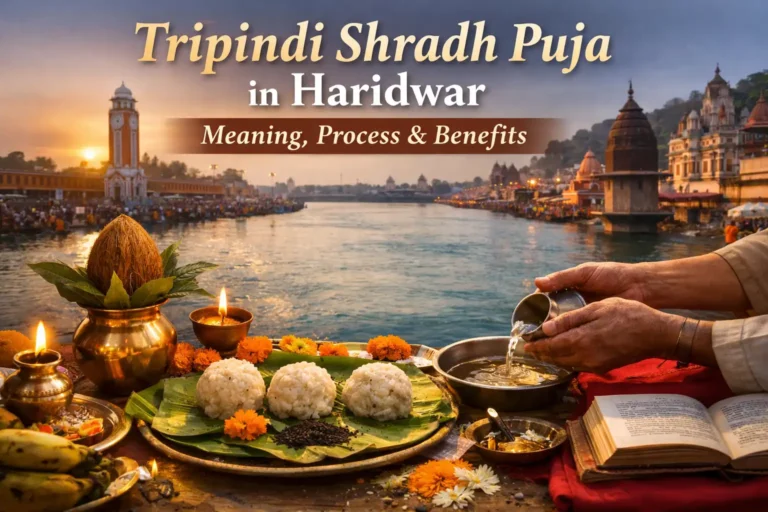


When families search Haridwar vs Gaya Pind Daan – Which is Better?, they are usually not looking for a simple one-line answer. They want clarity. They want to know which place carries deeper traditional importance, which is more practical for travel, and which one feels right for their family’s spiritual needs. The honest answer is this: both are deeply respected for ancestral rites, but they are not identical in religious emphasis or pilgrimage experience. Gaya is strongly identified in official tourism and pilgrimage material as a major site specifically for Pind Daan, especially around Vishnupad Temple and the Falgu River, while Haridwar is one of India’s most sacred Ganga pilgrimage cities, centered around Har Ki Pauri and ritual worship on the riverfront.
So the better question is not “Which place is universally superior?” but rather “Which place is better for our purpose, tradition, timing, and comfort?” That is what really helps families make the right choice.
Haridwar vs Gaya Pind Daan – Which Is Better for Your Family?
If you want the most tradition-specific destination for Pind Daan, Gaya usually stands out more strongly. Bihar Tourism describes Vishnupad Temple in Gaya as a major site for performing Pind Daan, and its Pitru Paksha material directly links Gaya with shraddha, tarpan, and ancestral peace on a very large scale.
If, however, your family is also looking for a sacred Ganga setting, easier access from North India, or a broader spiritual visit that includes bathing ghats, Ganga rituals, and temple darshan, Haridwar may feel more suitable. Official tourism sources highlight Har Ki Pauri and Brahmakund as the spiritual heart of Haridwar, where the Ganga is venerated daily and where the city’s sacred identity is strongest.
So in practical terms, Gaya is often seen as the more Pind Daan-focused destination, while Haridwar is often preferred as a Ganga-centered ancestral and pilgrimage experience. That distinction matters.
Why Gaya Is So Important for Pind Daan
Gaya’s importance is not just local belief or word-of-mouth. Bihar Tourism explicitly presents Vishnupad Temple as one of the main places where devotees perform Pind Daan for the salvation of ancestors. The temple is located on the banks of the Falgu River, and tourism material ties the city directly to this ritual tradition.
The wider Gaya ritual landscape also adds to its significance. Official sources describe Pitru Paksha in Gaya as a major period when large numbers of devotees come specifically for ancestral rites, and they note that rituals are performed at the Falgu River followed by prayer at Vishnupad Temple.
There is also a broader mythological layer. Bihar and Incredible India sources connect nearby sacred sites such as Sita Kund and Pretshila with ancestral offerings and moksha-related beliefs. Sita Kund, for example, is associated with the tradition that Sita offered Pind Daan for Dasharatha there, while Pretshila is described as a revered place for pitr tarpan and Pind Daan.
Because of this, many priests and pilgrims regard Gaya as a destination that is especially and directly identified with ancestral liberation rituals. That does not make Haridwar lesser, but it does make Gaya more specialized in this particular context.
Why Many Families Prefer Haridwar for Ancestral Rituals
Haridwar appeals to families for a different set of reasons. Official Uttarakhand and Incredible India sources describe Har Ki Pauri as one of the holiest ghats in Haridwar and identify Brahmakund as the most sacred stretch of the riverfront. The city’s spiritual identity is deeply tied to the Ganga, ritual bathing, and daily worship on the ghats.
For many Hindu families, that Ganga connection matters emotionally. Haridwar often feels more open, more familiar, and more connected to rituals of snan, asthi visarjan, tarpan, and general pilgrimage. Official tourism material emphasizes the city’s ghats, temples, and sacred river atmosphere rather than framing it only around one ritual category.
This is why some families choose Haridwar even when they know Gaya has a strong traditional association with Pind Daan. They may want a setting where the ritual is part of a larger spiritual journey by the Ganga. They may also find Haridwar easier to combine with other family rites and temple visits. That is a practical and emotional preference, not a wrong choice.
Haridwar vs Gaya: Key Differences That Actually Matter
The biggest difference is religious emphasis. Gaya is presented in official sources as a major center specifically for Pind Daan, Shraddha, and Pitru Paksha observance. Haridwar, by contrast, is presented more broadly as a sacred Ganga city centered on Har Ki Pauri, Brahmakund, bathing, aarti, and river-based ritual life.
The second difference is ritual atmosphere. In Gaya, the entire ecosystem around Pitru Paksha is heavily focused on ancestor rites. In Haridwar, the atmosphere is spiritually powerful too, but it is distributed across multiple forms of devotion, from Ganga snan to temple darshan to aarti and other puja in Haridwar.
The third difference is pilgrimage feel. Gaya often feels purpose-driven: families go there specifically to complete Pind Daan and related rites. Haridwar often feels broader and more fluid: the family may come for ancestral rituals, but also for the spiritual experience of the Ganga and Har Ki Pauri. This is an inference based on how the official tourism material presents each destination.
Which Place Is Better During Pitru Paksha?
During Pitru Paksha, Gaya becomes especially significant. Bihar Tourism specifically describes Gaya’s religious importance during this period and notes that pilgrims come in very large numbers seeking peace and moksha for their ancestors.
That means if your family wants the most tradition-centered Pitru Paksha setting for Pind Daan, Gaya usually has the edge. It is directly associated with the season in a way that is nationally recognized and institutionally organized. District notices for the Pitru Paksha Mela also reflect how established this annual observance is in Gaya.
Haridwar is still spiritually meaningful during Pitru Paksha, but its official identity is not built around that one annual ancestral observance in the same focused way. Haridwar remains a sacred choice year-round because of the Ganga and the ritual life of its ghats.
Travel, Ritual Experience, and Practical Comfort
This part matters more than many people admit. For some families, spiritual value is inseparable from practical comfort. Elderly parents may not want a crowded schedule. A family coming from Delhi, Uttar Pradesh, Haryana, Punjab, or Uttarakhand may find Haridwar easier and more familiar to manage. A family wanting the classic Pind Daan destination may be willing to go farther for Gaya because they see it as the more specific ritual center. This is partly a practical inference, but it aligns with the way the destinations are positioned by official sources.
Another practical point is the seasonal experience. Bihar Tourism lists the best time to visit Vishnupad Temple as September to April, which fits the main pilgrimage season well.
So, for families who prioritize convenience, riverfront accessibility, and a wider devotional environment, Haridwar may feel easier. For those who want the place most strongly identified with the act of Pind Daan itself, Gaya may feel more complete.
How to Choose the Right Pandit for Pind Daan
Whether you choose Haridwar or Gaya, the quality of the priest matters. A proper ritual depends on clear guidance, sankalp details, gotra accuracy, and an honest explanation of what is included. If you are choosing Haridwar, many families naturally look for the Best Pandit in Haridwar or a trusted best pandit ji in Haridwar who can guide them calmly and clearly.
A good priest should:
- explain the ritual process without confusion
- tell you what is essential and what is optional
- respect your family tradition
- give transparent pricing and timing
- avoid pressuring you into unnecessary additions
The place is sacred, but the experience also depends on the person conducting the rite.
Final Verdict: Haridwar or Gaya?
So, Haridwar vs Gaya Pind Daan – Which is Better?
If you want the destination most specifically and traditionally associated with Pind Daan and Pitru Paksha, Gaya is usually the stronger choice. Official tourism sources consistently frame Gaya, Vishnupad Temple, the Falgu River, and surrounding sites as central to ancestral rites.
If you want a sacred Ganga-based experience, a broader pilgrimage atmosphere, and a setting where ancestral rituals can be combined with Har Ki Pauri, river worship, and temple darshan, Haridwar may be the better fit. Official sources clearly position Haridwar as one of India’s great river pilgrimage cities centered around Brahmakund and Har Ki Pauri.
In the end, the better place is the one that matches your family’s tradition, emotional comfort, priest guidance, and practical travel needs. Gaya may be the more specialized answer. Haridwar may be the more accessible and emotionally resonant one. Both are sacred. The right choice depends on what you want the ritual journey to feel like.