
When people search for pind daan anytime, they are usually not asking a casual question. Most are trying to understand whether they can still perform an important ancestral rite if they missed Pitru Paksha, could not travel on the right date, or recently realized that certain family rituals were never completed properly. It is a sincere concern, and in many homes, it comes with emotion, pressure, and a deep sense of duty.
The short answer is this: Pind Daan is not something that should be treated casually, but it is also not limited to just one narrow window in every situation. There are preferred times, traditionally stronger dates, and certain exceptions. That is why the truth sits somewhere between strict rules and practical reality.
For families in North India especially, this question often leads to Haridwar. Some come from Delhi, Meerut, Jaipur, Chandigarh, Lucknow, or Dehradun because they want to perform the ritual by the Ganga in a place long associated with ancestral rites. And once they arrive, the next question is usually the same: can this be done now, or should we wait?
What Is Pind Daan and Why Is It Important?
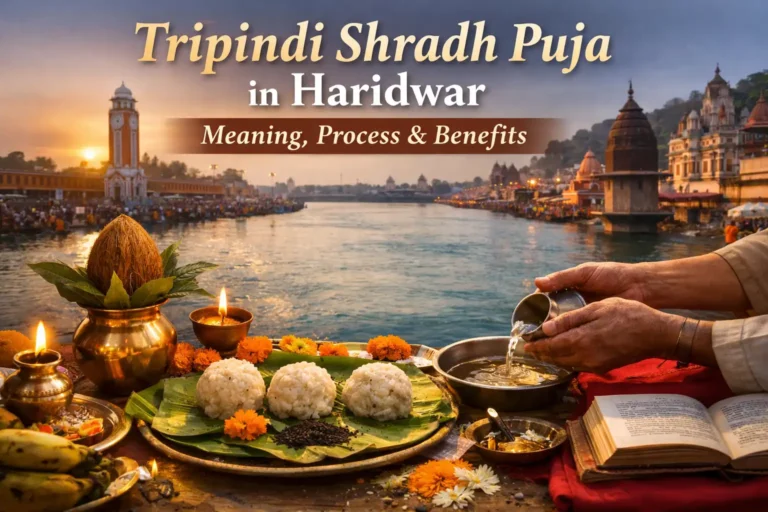
Pind Daan is a sacred offering made for departed ancestors in Hindu tradition. The pind, usually prepared from rice flour, barley flour, black sesame, and other ritual ingredients, is offered with mantras and sankalp for the peace and upliftment of the soul.
This is not just ritual in the mechanical sense. For many families, it is an act of remembrance. It carries the feeling of gratitude, responsibility, and unfinished duty. In homes where elders are respected not only in life but after death, Pind Daan becomes part of that continuity.
Traditionally, it is linked with Shradh, Tarpan, and Pitru-related karma. In some cases, families perform it annually. In others, it is done after a death or when priests advise that ancestral rites remain incomplete. The purpose is simple, even if the procedure is detailed: to pray for peace for the departed and blessings for the living.
That is why people do not want to make mistakes around it. They want to know the right day, the right place, and the right method.
Pind Daan Anytime: What Tradition Actually Says
This is the heart of the issue.
Can Pind Daan be done at any time? Not in the careless sense of “whenever it feels convenient.” But also, not every tradition says it is impossible outside Pitru Paksha. The real answer depends on context.
There are certain periods that are considered especially auspicious for ancestral rites. Pitru Paksha is the most widely known. The death tithi of the departed person also matters. In some cases, Amavasya carries importance too. These dates are traditionally preferred because they are spiritually aligned with remembrance and offerings to ancestors.
At the same time, many priests acknowledge that life does not always follow ideal calendars. A family may miss the period because of illness, travel, financial difficulty, or lack of proper guidance. Sometimes the need becomes clear only later. In such cases, Pind Daan may still be performed on a suitable date chosen with priestly guidance.
So the phrase pind daan anytime needs to be understood carefully. It does not mean “any random day with no rules.” It means there can be valid circumstances where the ritual is done outside the most commonly recommended period.
That distinction matters.
When Is the Best Time to Perform Pind Daan?
Even if exceptions exist, it helps to first understand the ideal times.
Pitru Paksha
Pitru Paksha is the most recognized and widely observed period for ancestral offerings. During these days, families perform Shradh, Tarpan, and Pind Daan for parents, grandparents, and forefathers. If someone asks for the most spiritually suitable time in a broad sense, this is usually the first answer.
This is also why Haridwar becomes especially busy during Pitru Paksha. Priests, ghats, and ritual spaces see a steady flow of families coming for ancestral rites. The atmosphere during this period feels different. There is seriousness, devotion, and a shared understanding of why everyone has come.
Death Tithi
The annual death tithi of the departed soul is another important day. Many families perform Shradh and related offerings on this lunar date each year. It is personal, family-specific, and deeply meaningful.
Amavasya and Other Suitable Dates
In many traditions, Amavasya is associated with Pitru-related offerings, especially Tarpan. Depending on family custom, region, and priestly guidance, Pind Daan may also be connected with these dates.
After a Recent Death
Certain rituals following a recent death are time-bound according to family tradition and sampradaya. In such cases, the sequence of rites matters more than general convenience. This is why advice from an experienced priest is important.
Can Pind Daan Be Done If You Missed Pitru Paksha?
Yes, in many cases, it still can.
This is where people often feel unnecessary panic. They assume that if Pitru Paksha has passed, the opportunity is gone forever. That is not always true. Hindu ritual practice is disciplined, but it is not blind to real-life circumstances. If a family could not travel, did not know the correct procedure, or wants to complete a long-pending ritual in a sacred place, a priest may suggest another appropriate date.
That said, postponing without reason is not ideal. A missed date and an indefinitely delayed duty are not the same thing.
A practical way to think about it is this:
- If the ideal time is available, follow it.
- If it has passed, do not assume the ritual is meaningless now.
- Get the timing checked properly rather than relying on hearsay.
Many families who visit Haridwar outside Pitru Paksha do exactly this. They consult a priest, explain their situation, and perform the rite on a date considered suitable for their case.
Why Many Families Choose Haridwar for Pind Daan
Haridwar holds a special place in the religious imagination of Hindu families. The Ganga, the ghats, the long priestly tradition, and the feeling of tirtha all give ancestral rites here a different weight.
There is also a practical reason. Haridwar is accessible. Families from Delhi NCR, western Uttar Pradesh, Haryana, Rajasthan, Punjab, and Uttarakhand often find it easier to travel here than to more distant pilgrimage centers. That makes it a natural choice for those who want a sacred place without a difficult journey.
But the importance of Haridwar is not only convenience. It is the atmosphere. Early in the morning, when the river is cool, bells ring from nearby temples, and priests sit with families by the water, the ritual feels grounded in tradition rather than performance. For many people, that matters more than anything else.
This is why many search specifically for Pind Daan Puja in Haridwar rather than looking for a generic service. They are not only looking for a ritual. They are looking for the right setting.
How to Choose the Best Pandit in Haridwar
When families search for the Best Pandit in Haridwar, they are usually looking for trust, clarity, and proper guidance. That is completely reasonable. Rituals connected with ancestors should not feel rushed, confusing, or commercially forced.
A good pandit does more than chant mantras. He listens to the family’s situation. He explains whether the ritual should be done now, whether another date is better, and what exactly is required.
A few things make a real difference:
Knowledge of Ritual Differences
Pind Daan, Shradh, Tarpan, Narayan Bali, and Pitru Dosh remedies are related, but they are not the same. A knowledgeable priest should explain the difference instead of using every term interchangeably.
Clear Communication
Families often have practical questions: What should we bring? Who should sit in the puja? How long will it take? Is fasting needed? A reliable priest answers these simply.
Respect for Emotion
Many people arrive in grief or with family history that is difficult to talk about. Ritual guidance should feel calm and respectful, not dramatic.
Honest Advice
Not every problem requires a bigger puja. Sometimes a straightforward ancestral rite is enough. The Best Pandit in Haridwar is not the one who suggests the most rituals. It is the one who suggests the right one.
Common Misunderstandings About Pind Daan
A lot of confusion comes from half-knowledge.
One common belief is that Pind Daan can only be done in Pitru Paksha and never at any other time. Another belief goes to the other extreme and says it can be done any day without thought. Both are incomplete.
There is also a tendency to mix ancestral rites with every other spiritual issue. Families may hear about Pitru Dosh, Kaal Sarp Dosh, Mangal Dosh, or graha-related problems all in one conversation and assume everything must be done together. Sometimes that is unnecessary.
In some cases, people looking into ancestral rituals also explore related topics such as Pitra Dosh Nivaran Puja in Haridwar, Narayan Bali Puja in Haridwar, Kalsarp Dosh Puja in Haridwar, Manglik or Mangal Dosh Puja in Haridwar, or Navgraha Shanti Puja Havan in Haridwar. These may have their own place, but they should not be bundled in thoughtlessly. A proper priest will separate one need from another.
What Usually Happens During Pind Daan in Haridwar?
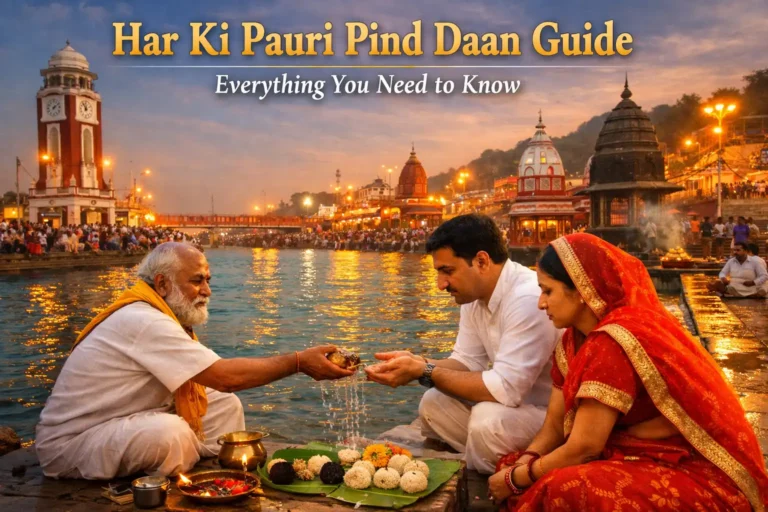
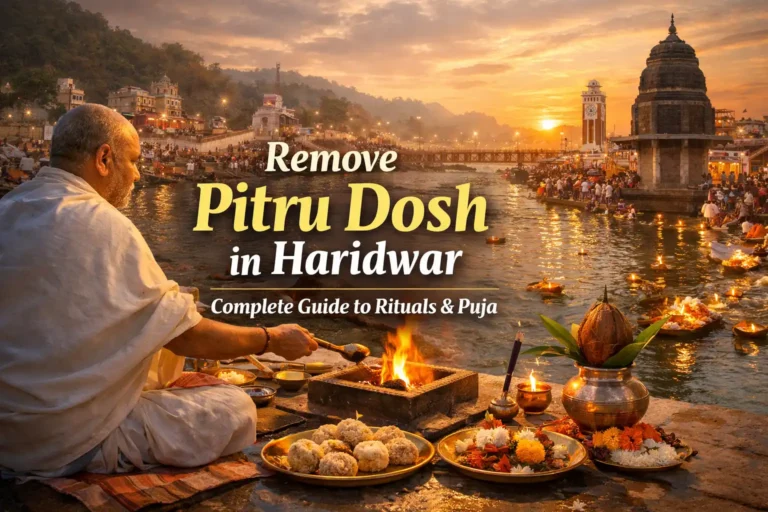
The exact procedure varies by tradition, but the broad structure often includes sankalp, purification, offering of pind, Tarpan, mantra recitation, and prayers for the departed. In Haridwar, this usually happens on the ghats by the Ganga, where the setting itself becomes part of the spiritual experience.
Families often remember small details more than the technical sequence. The cold water in the morning. The priest asking for the ancestor’s name. The silence that comes for a moment in the middle of the mantras. The feeling, afterward, that something long pending has finally been done.
That is why the question is rarely just about timing. It is about responsibility. People want to know whether they still have the chance to do what should have been done. In many cases, the answer is yes.
So, Can Pind Daan Be Done Anytime?
The most honest answer is this: Pind Daan should ideally be performed on traditionally appropriate dates, especially Pitru Paksha or the death tithi. Those remain important. But if those dates are missed, or if there are genuine circumstances that require the ritual later, it may still be performed on a suitable day under proper guidance.
So no, not “anytime” in the casual sense. But also, not “never again” if the ideal window has passed.
That middle ground is often where the truth lives in traditional practice.
Final Thoughts
The question behind pind daan anytime is really about duty, timing, and peace of mind. People are trying to do something meaningful for their ancestors, and they do not want to get it wrong.
Tradition gives clear importance to certain dates, especially Pitru Paksha. At the same time, it also allows room for sincere families who need to complete the ritual later, particularly when they reach a sacred place like Haridwar and receive proper guidance. That is why context matters as much as calendar.
For many families, Haridwar remains one of the most trusted places for ancestral rites because it brings together sacred geography, living tradition, and experienced priests. And when choosing the Best Pandit in Haridwar, what matters most is not marketing language or big claims. It is knowledge, honesty, patience, and the ability to guide a family through a serious ritual with dignity.
In the end, Pind Daan is not about fear. It is about remembrance. It is about completing a responsibility with faith, care, and respect for those who came before us.