
In many Indian households, when life seems to be stuck without a clear reason, elders often point toward something deeper—something beyond everyday problems. One such belief is Pitru Dosh, a condition said to arise when ancestors are not at peace or certain rituals were left incomplete.
If you’ve been noticing repeated obstacles, emotional heaviness, or unexplained struggles, you may have already come across the idea of performing a Pitru Dosh Nivaran Puja in Haridwar. But before considering any remedy, it’s important to understand the signs, the meaning behind them, and why this puja holds such importance.
Let’s take a closer, grounded look at it.
What is Pitru Dosh?
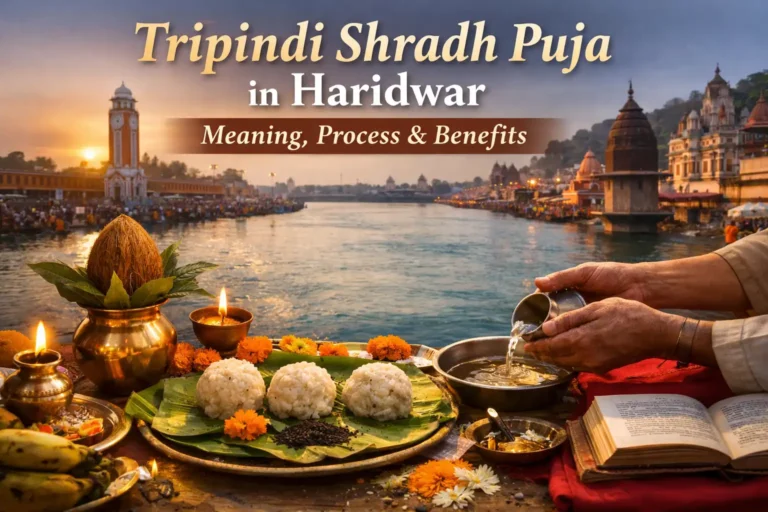
Pitru Dosh, in simple terms, is believed to be an imbalance caused by unresolved ancestral karma. According to Vedic traditions, when ancestors (Pitru) are not properly honored through rituals like shraddh, pind daan, or tarpan, their blessings may not flow smoothly to future generations.
This isn’t always about something dramatic. Often, it shows up quietly—through patterns in life that don’t seem to change despite effort.
Many families across India, especially those connected to traditional practices, consider performing rituals in sacred places like Haridwar to address this.
Common Signs of Pitru Dosh in Your Life
Not every problem in life is linked to Pitru Dosh, but certain recurring patterns are commonly associated with it. These signs are usually subtle at first but become noticeable over time.
1. Repeated Financial Struggles
You work hard, opportunities come close, but something always slips away at the last moment. It feels like progress is always just out of reach.
2. Delays in Marriage or Relationship Issues
Unexplained delays in marriage, frequent misunderstandings, or unstable relationships can sometimes be seen as a sign of ancestral imbalance.
3. Health Issues Without Clear Diagnosis
Some people experience recurring health problems that don’t seem to have a strong medical explanation or keep returning despite treatment.
4. Lack of Peace at Home
Frequent arguments, tension in the household, or a constant feeling of unrest—even when everything seems fine on the surface.
5. Career Instability
Switching jobs frequently, lack of growth, or facing sudden setbacks despite being capable.
6. Difficulty in Having Children
In some cases, couples facing repeated challenges in starting a family consider exploring spiritual reasons, including Pitru Dosh.
7. Strange or Recurring Dreams
Dreams involving ancestors, water, or unknown figures—especially when they repeat—are often taken seriously in traditional beliefs.
It’s worth noting that these signs should be understood with balance. Not every difficulty is spiritual, but when patterns persist without clear reasons, people often turn toward rituals for clarity and peace.
Why Pitru Dosh Should Not Be Ignored
Ignoring such patterns can sometimes lead to prolonged stress—not just spiritually, but emotionally as well.
Many families who eventually perform the rituals often say the biggest change they notice isn’t just in external situations, but in the overall sense of calm and direction in life.
It’s less about fear, and more about restoring a connection—acknowledging the past to bring stability into the present.
Spiritual Significance of Haridwar for Pitru Rituals
Haridwar is not just a religious destination; it holds a deep connection with ancestral rituals.
Situated on the banks of the Ganga, the city has been a center for pind daan, shraddh, and tarpan for centuries. The flowing river is believed to carry offerings directly to ancestors, making the rituals more meaningful.
Families from across India travel here specifically for this purpose. There’s a sense of tradition that continues uninterrupted—priests who have been performing these rituals for generations, maintaining detailed family records (known as “vahis”).
This is why many people prefer performing a Pitru Dosh Nivaran Puja in Haridwar rather than elsewhere.
How Pitru Dosh Nivaran Puja in Haridwar is Performed
The process is rooted in Vedic rituals, but it is usually guided step by step by an experienced priest.
Typically, the puja includes:
- Sankalp (taking a vow with your family details)
- Pind Daan (offering symbolic food to ancestors)
- Tarpan (offering water with mantras)
- Brahmin Bhoj (feeding priests or the needy)
- Specific mantras and rituals based on the individual’s situation
The entire process may take a few hours to a full day, depending on the type of dosh and rituals involved.
What matters most is the intention and the correct method—not just the procedure itself.
Choosing the Best Pandit in Haridwar for the Puja
This part is often overlooked, but it makes a real difference.
A knowledgeable and experienced priest ensures that rituals are performed correctly, without confusion or shortcuts. In Haridwar, many families rely on pandits who have been associated with their lineage for years.
When looking for the Best Pandit in Haridwar, consider:
- Experience in Pitru rituals
- Clear communication about the process
- Transparency in rituals and materials
- Traditional knowledge, not just quick services
It’s always better to speak directly, understand the process, and then proceed.
When Should You Perform Pitru Dosh Nivaran Puja?
There isn’t a single fixed time, but certain periods are considered more suitable:
- Pitru Paksha (the most important period for ancestor rituals)
- Amavasya (new moon days)
- Personal family occasions where ancestral blessings are sought
That said, many people perform the puja whenever they feel the need, especially when facing ongoing issues.
Real-Life Situations Where People Seek This Puja
Over time, certain situations commonly bring people to Haridwar:
- After multiple failures in business or career
- Before major life decisions like marriage
- When facing long-term family issues
- After consulting astrologers who suggest Pitru Dosh remedies
- Simply to fulfill family traditions
Interestingly, not everyone comes with a problem. Some come with a sense of responsibility—to complete what earlier generations may have left undone.
Final Thoughts: Restoring Balance Through Ancestral Rituals
Life doesn’t always move in straight lines. Sometimes, despite doing everything right, things don’t fall into place.
In such moments, traditions like Pitru Dosh Nivaran Puja in Haridwar offer a different perspective—not as a quick fix, but as a way to reconnect, reflect, and restore balance.
Whether one sees it spiritually, culturally, or emotionally, the intention remains the same: to bring peace to ancestors and, in doing so, create space for harmony in the present.
If you’ve been sensing patterns that don’t have clear answers, it may be worth understanding this aspect a little deeper. Sometimes, clarity begins with simply acknowledging what came before us.