

Rudrabhishek Puja in Haridwar
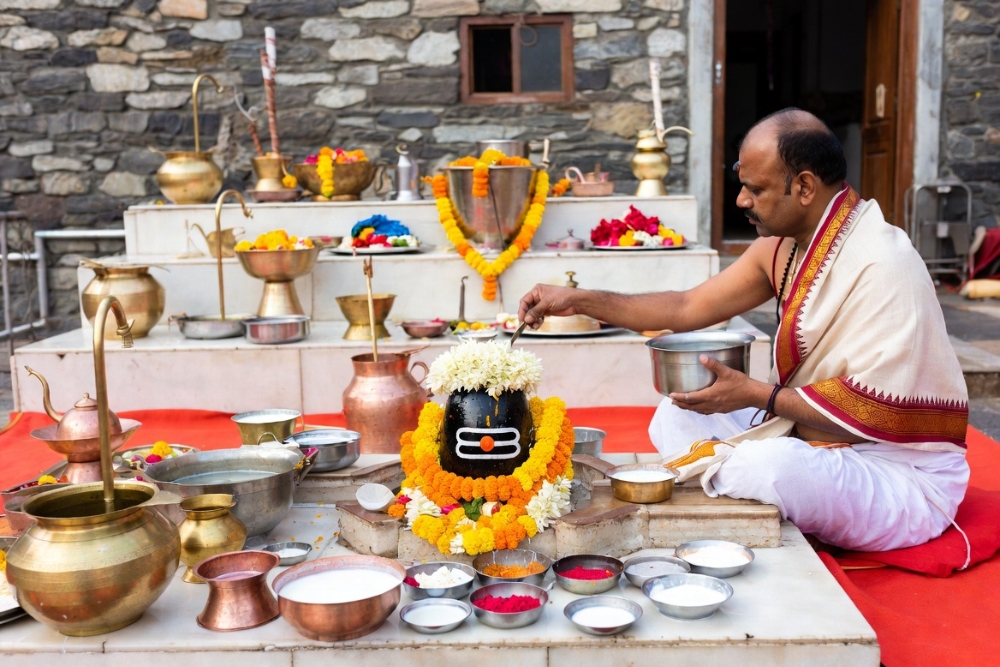
Rudrabhishek Puja in Haridwar: Meaning, Ritual Process, and Spiritual Importance
Among the many sacred rituals dedicated to Lord Shiva, Rudrabhishek Puja in Haridwar holds a special place for devotees. The ceremony is a powerful Vedic ritual where the Shiva Lingam is bathed with sacred offerings while Vedic mantras from the Rudra Sukta are chanted. It is believed to bring spiritual purification, remove obstacles, and invite divine blessings.
Haridwar, situated along the banks of the sacred Ganga, has long been a spiritual center for Shiva worship. With ancient temples, experienced priests, and a deeply devotional atmosphere, the city attracts thousands of devotees who wish to perform Rudrabhishek in a sacred environment.
Many pilgrims begin their day before sunrise, walking through narrow lanes that lead to temples where the sound of bells and Vedic chants fills the air. In such a setting, performing Rudrabhishek becomes not only a ritual but also a deeply personal spiritual experience.
In this guide, we’ll explore the meaning of Rudrabhishek Puja in Haridwar, its ritual process, the best time to perform it, and how devotees typically arrange the ceremony with the best pandit in Haridwar.
Understanding Rudrabhishek Puja
Rudrabhishek is a sacred ritual dedicated to Lord Shiva, one of the principal deities of Hindu tradition. The word “Rudra” refers to a powerful form of Shiva, while “Abhishek” means ceremonial bathing.
During the ritual, the Shiva Lingam is bathed with sacred substances such as milk, honey, curd, ghee, water, and sandalwood while priests chant powerful Vedic mantras.
These offerings symbolize purification, devotion, and surrender to divine energy.
Rudrabhishek is mentioned in ancient scriptures and is believed to help devotees seek protection, prosperity, and spiritual peace.
Why Haridwar Is a Sacred Place for Rudrabhishek Puja
The Spiritual Energy of the Ganga
Haridwar is considered one of the holiest pilgrimage cities in India. The presence of the sacred Ganga river adds immense spiritual significance to rituals performed here.
When devotees perform Rudrabhishek Puja in Haridwar, the ceremony is often accompanied by offerings of Ganga water, which is believed to enhance the spiritual power of the ritual.
The calm atmosphere of the ghats and temples creates a setting where devotion feels natural and effortless.
Ancient Shiva Temples
Haridwar and its surrounding areas are home to several temples dedicated to Lord Shiva.
Many devotees perform Rudrabhishek in temples such as:
Daksh Mahadev Temple
Bilkeshwar Mahadev Temple
Neelkanth Mahadev Temple (near Haridwar)
These temples have been places of worship for centuries, and rituals performed here carry a deep spiritual connection to tradition.
Spiritual Significance of Rudrabhishek Puja
For devotees of Lord Shiva, Rudrabhishek is more than a ritual—it is a powerful act of devotion.
Removal of Obstacles
Many people perform Rudrabhishek to seek relief from life’s challenges and obstacles.
Peace of Mind
The chanting of Rudra mantras during the ritual is believed to create a calming spiritual environment.
Blessings for Health and Prosperity
Devotees often perform the puja seeking blessings for family well-being, success, and spiritual growth.
Strengthening Spiritual Connection
Participating in Rudrabhishek can help devotees feel closer to the divine presence of Lord Shiva.
Types of Rudrabhishek Performed in Haridwar
Depending on the devotee’s intention and the scale of the ritual, different forms of Rudrabhishek may be performed.
Laghu Rudrabhishek
A smaller and commonly performed ritual suitable for individuals or families.
Maha Rudrabhishek
A more elaborate ceremony involving multiple priests chanting Vedic hymns.
Ekadash Rudrabhishek
This involves chanting the Rudra Sukta eleven times and is considered spiritually powerful.
A knowledgeable priest or the best pandit in Haridwar can recommend the appropriate type of ceremony.
Ritual Process of Rudrabhishek Puja in Haridwar
The procedure of Rudrabhishek Puja in Haridwar follows traditional Vedic practices. Although the sequence may vary slightly across temples, the general process remains similar.
Sankalp: Declaring the Intention
The ritual begins with Sankalp, where the priest formally states the purpose of the puja.
The devotee provides:
Name
Gotra (family lineage)
Purpose of performing the ritual
This step connects the ceremony to the devotee’s spiritual intention.
Invocation of Lord Shiva
The priest invokes Lord Shiva through sacred mantras and prayers.
Devotees meditate on the divine form of Shiva while the ritual begins.
Abhishek of the Shiva Lingam
The central part of the ceremony involves bathing the Shiva Lingam with sacred substances.
Common offerings include:
Ganga water
Milk
Honey
Yogurt
Ghee
Sugar
Bilva leaves
Each offering carries symbolic meaning connected to purity and devotion.
Chanting of Rudra Mantras
Priests chant Vedic hymns from the Rudra Sukta during the abhishek.
These mantras are believed to carry powerful vibrations that purify the environment and the mind.
Aarti and Final Blessings
The ceremony concludes with aarti, where lamps are waved before the deity while devotional hymns are sung.
Devotees then receive blessings and prasad.
Best Time to Perform Rudrabhishek Puja
Rudrabhishek can be performed throughout the year, but certain days are considered especially auspicious.
Mondays
Monday is traditionally associated with Lord Shiva and is considered an ideal day for the ritual.
Maha Shivratri
This festival dedicated to Shiva is one of the most significant occasions for performing Rudrabhishek.
Shravan Month
The month of Shravan (July–August) is considered highly sacred for Shiva worship.
During this time, temples in Haridwar see a large number of devotees performing Rudrabhishek.
Finding the Best Pandit in Haridwar for Rudrabhishek
Since Rudrabhishek involves Vedic chanting and ritual procedures, the guidance of an experienced priest is important.
Many devotees look for the best pandit in Haridwar to ensure the ceremony is performed correctly.
Here are some factors to consider when selecting a priest.
Knowledge of Vedic Mantras
The priest should be well-versed in the Rudra Sukta and other sacred chants.
Experience with Temple Rituals
Experienced priests understand how to conduct the ceremony according to traditional practices.
Clear Communication
Devotees visiting from different cities may appreciate priests who explain the meaning and process of the ritual.
Local Reputation
In pilgrimage cities like Haridwar, recommendations from locals and other devotees often help identify respected priests.
Preparing for Rudrabhishek Puja in Haridwar
If you are planning to perform the ritual, a little preparation can help ensure a peaceful experience.
Choose the Temple in Advance
Decide whether you want to perform the puja at a temple in Haridwar or nearby pilgrimage sites.
Confirm the Puja Timing
Many temples perform Rudrabhishek early in the morning.
Bring Devotional Offerings
Common offerings include:
Bilva leaves
Flowers
Fruits
Incense
In most cases, the priest arranges the required puja materials.
Other Spiritual Activities in Haridwar
When visiting Haridwar for Rudrabhishek Puja, many devotees also participate in other spiritual experiences.
Ganga Aarti at Har Ki Pauri
The evening Ganga Aarti is one of the most mesmerizing spiritual events in Haridwar.
Temple Visits
Pilgrims often visit temples such as:
Mansa Devi Temple
Chandi Devi Temple
Neelkanth Mahadev Temple
Meditation by the River
Many visitors spend quiet moments by the Ganga reflecting and praying.
Cultural Importance of Shiva Worship
Lord Shiva has long been revered as the symbol of transformation, meditation, and cosmic balance.
Rituals like Rudrabhishek Puja in Haridwar reflect centuries of spiritual practice and devotion.
The ceremony connects devotees with ancient traditions while offering a moment of inner reflection and prayer.
Standing in a temple while sacred mantras echo through the halls often leaves devotees with a deep sense of peace.
Conclusion
For generations, Haridwar has remained a sacred destination where devotees gather to perform important rituals and seek divine blessings.
Performing Rudrabhishek Puja in Haridwar allows devotees to connect with the spiritual energy of Lord Shiva in one of India’s most revered pilgrimage cities.
With the guidance of the best pandit in Haridwar, the ritual follows authentic Vedic traditions that have been preserved for centuries.
More than just a ceremony, Rudrabhishek is a moment of devotion—an opportunity to seek peace, clarity, and blessings through the worship of Lord Shiva.
Why Choose Us
- Experienced and Knowledgeable Pandits
- Puja Services with All Puja Materials Included
- Authentic Vedic Rituals
- Complete Guidance and Assistance
- Convenient Puja Arrangements at Sacred Ghats
Other Puja Service
- Pitra Dosh Nivaran Puja in Haridwar
- Narayan Bali Puja in Haridwar
- Narayan Nag Bali Puja in Haridwar
- Pind Daan Puja in Haridwar
- Mundan Sanskar Puja in Haridwar
- Rudrabhishek Puja in Haridwar
- Kalsarp Dosh Puja in Haridwar
- Marriage or Vivah Puja in Haridwar
- Manglik or Mangal Dosh Puja in Haridwar
- Kumbh Vivah and Vishnu Vivah in Haridwar
- Navgraha Shanti Puja Havan in Haridwar