

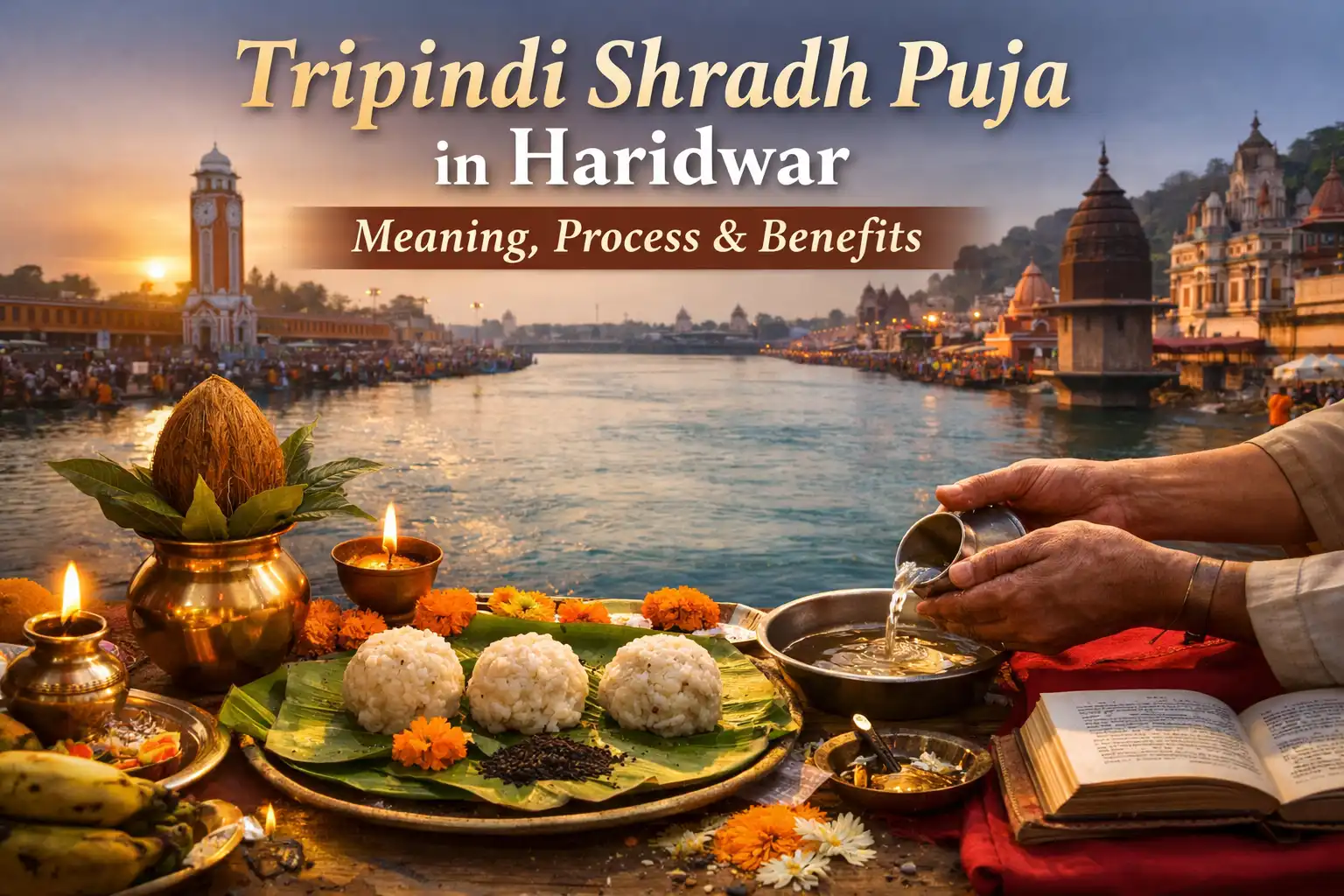
There are some rituals in Sanatan tradition that people do not turn to casually. They do so when a family feels stuck, when repeated obstacles begin to feel larger than coincidence, or when there is a deep inner sense that something connected to the ancestors remains unresolved. Tripindi Shradh Puja in Haridwar is one such sacred ritual. It is performed with faith, humility, and a sincere intention to bring peace to departed souls and harmony back into the family line.
For many families, this puja is not just a ceremony. It is an act of remembrance and responsibility. In a city like Haridwar, where the Ganga is worshipped not only as a river but as a living divine presence, such rituals carry a different emotional and spiritual weight. People come here from across India because they believe that prayers offered in Haridwar reach the ancestors with greater purity and grace.
This guide explains the meaning of Tripindi Shradh, its process, its benefits, and why Haridwar remains one of the most respected places to perform it.
What Is Tripindi Shradh Puja?
Tripindi Shradh is a special ancestral ritual performed for the peace of souls who, according to traditional belief, have not fully attained satisfaction or liberation after death. It is generally done when regular Shradh, tarpan, or family remembrance rituals have been missed over generations, or when there is a belief that certain departed ancestors remain unsatisfied.
The word itself gives a clue. “Tri” refers to three, and “Pindi” points to the ritual offering of pind, usually made as symbolic food offerings for the departed. In this puja, prayers and offerings are made for three generations of ancestors, especially those whose rites may have been incomplete, forgotten, or improperly performed.
Why is this ritual performed?
Tripindi Shradh is usually performed to address ancestral unrest, often described in spiritual language as Pitru-related imbalance. In many traditional households, elders recommend it when a family experiences recurring setbacks such as delays in marriage, instability in the home, constant financial strain, repeated health concerns, or a general lack of peace without a clear reason.
That does not mean every life problem has a ritual cause. But in Indian spiritual practice, the ancestral dimension is taken seriously. The belief is simple: when forefathers are remembered with sincerity, their blessings flow more freely. When they are neglected, the family may feel that absence.
Who should consider Tripindi Shradh?
This puja may be considered by families who:
- have not performed regular Shradh rituals for many years
- feel there may be unresolved ancestral karma
- have been advised by a learned priest after studying the family’s circumstances or horoscope
- want to perform a complete and respectful ritual for departed ancestors in a sacred place
It is often discussed alongside remedies connected to ancestral peace, such as Pitra Dosh Nivaran Puja in Haridwar, especially when the concern is directly related to Pitru Dosh.
Why Tripindi Shradh Puja in Haridwar Holds Special Importance
Not every ritual place carries the same spiritual atmosphere. Haridwar has long held a special place in Hindu tradition because it is one of the holiest gateways to moksha-related rites. The city sits on the banks of Maa Ganga, and that matters deeply in ancestral rituals.
The spiritual significance of Haridwar
In Haridwar, the act of offering pind, tarpan, and prayers feels rooted in something ancient. Generations have come here for asthi visarjan, Shradh karma, pind daan, and dosh nivaran rituals. The city is associated with purification, devotion, and release. For families performing Tripindi Shradh, this setting creates a powerful sense of closure.
You see it in small things too. The morning bells. The sound of mantras by the ghats. The way families sit quietly beside the river, carrying memory, grief, duty, and hope all at once. Haridwar is not only a location on a map. For many, it is a place where the emotional and the spiritual meet.
Why families choose Haridwar for ancestral rituals
People often choose Haridwar because:
- the Ganga is considered highly auspicious for ancestral offerings
- the city has a long tradition of priests experienced in Shradh and pind daan rituals
- families can perform multiple related rites in one pilgrimage
- the atmosphere supports prayer, reflection, and spiritual seriousness
Those who are also planning connected rituals may explore Pind Daan Puja in Haridwar, which is often considered an essential offering for departed souls.
When Is Tripindi Shradh Puja Recommended?
Tripindi Shradh is not usually performed randomly. It is often recommended under specific family or spiritual circumstances.
Common signs and situations
A family may consider this puja when there are:
- repeated obstacles in important life events
- unexplained disturbances in family harmony
- a feeling that ancestral rituals were missed in the past
- recurring dreams or emotional impressions related to departed elders
- guidance from a knowledgeable priest or astrologer pointing toward ancestral remedies
In traditional practice, these patterns are sometimes connected with Pitru Dosh or ancestral dissatisfaction. In such cases, families may also look into related spiritual remedies like Narayan Bali Puja in Haridwar, particularly when there is concern about unnatural death or unresolved soul-related rites.
Suitable tithis and timings
Tripindi Shradh can be performed on suitable dates based on the Hindu calendar and priestly guidance. Pitru Paksha is often considered a meaningful period for ancestor-related rituals, though specific muhurat and suitability depend on the person’s family tradition and the advice of the pandit conducting the ceremony.
This is one reason people often look for the Best Pandit in Haridwar rather than simply the nearest one. The ritual is sacred, layered, and detail-sensitive. A knowledgeable priest helps ensure that the sankalp, mantras, offerings, and sequence are done properly.
Step-by-Step Process of Tripindi Shradh Puja in Haridwar
The process may vary slightly depending on sampradaya, family tradition, and the priest’s method, but the broad structure remains similar.
Tripindi Shradh Puja in Haridwar: The Ritual Process
Sankalp and invocation
The ritual usually begins with purification and sankalp. The person performing the puja, often along with close family members, sits before the priest and makes a formal intention. This intention includes the names of ancestors, family lineage, and the purpose of the ritual.
The priest then invokes divine blessings and ancestral presence through Vedic mantras. This stage sets the spiritual foundation. It is not rushed. In a proper setting, the sankalp is treated with seriousness because intention matters as much as action in these rites.
Offerings, pind daan, and tarpan
After the invocation, pind offerings are prepared using ritual ingredients. These offerings symbolically nourish and honor the departed. Tarpan, which involves offering water with mantras, is then performed to express reverence and fulfillment toward the ancestors.
This is usually the emotional center of the puja. For many participants, it becomes a moment of quiet release. People who came carrying unanswered grief often describe this part as deeply moving.
In some situations, other rituals may be advised depending on horoscope and family circumstances, such as Kalsarp Dosh Puja in Haridwar or Manglik or Mangal Dosh Puja in Haridwar, especially when ancestral concerns are seen alongside planetary afflictions.
Brahmin bhojan and daan
After the main offerings, the ritual often concludes with daan and feeding of Brahmins, depending on the format followed by the officiating priest. This part reflects the principle of giving. In Hindu ritual tradition, offering food, dakshina, and charity helps complete the karma of the puja in a meaningful way.
The priest may also guide the family on what to do afterward, including simple observances, remembrance practices, or future annual Shradh recommendations.
Benefits of Tripindi Shradh Puja
People usually do not perform this puja expecting instant miracles, and it is better to approach it with sincerity rather than transaction. Still, within spiritual tradition, the benefits of Tripindi Shradh are considered profound.
Spiritual peace and ancestral blessings
The first and most important benefit is believed to be peace for unsatisfied ancestors. When the departed are remembered properly and with devotion, the family line is thought to receive their blessings more naturally.
Many believe the puja helps:
- reduce ancestral unrest
- support peace in the household
- remove subtle blocks in important areas of life
- bring spiritual satisfaction to both the living and the departed
Emotional and family-level relief
There is also a human side to this ritual. It gives families a way to acknowledge memory, duty, and continuity. In a fast-moving world, ancestral rituals help people reconnect with where they come from. That has emotional value, not just religious value.
For some, the puja brings a sense of closure after years of postponement. For others, it becomes a way to restore family tradition. And for many, performing it in Haridwar adds a feeling that the responsibility has been fulfilled in the right place, with the right intent.
Where astrological remedies are also part of the family’s path, rituals such as Navgraha Shanti Puja Havan in Haridwar may be considered to support overall balance.
Related Pujas You May Also Consider in Haridwar
Tripindi Shradh often exists within a wider spiritual context. Depending on the family’s needs, a priest may recommend related rituals. These can include:
- Pitra Dosh Nivaran Puja in Haridwar for ancestral dosh-related concerns
- Pind Daan Puja in Haridwar for honoring departed souls through traditional offerings
- Kalsarp Dosh Puja in Haridwar for those facing specific horoscope-related obstacles
- Manglik or Mangal Dosh Puja in Haridwar where marriage or family issues have astrological significance
- Navgraha Shanti Puja Havan in Haridwar for broader planetary peace
- Narayan Bali Puja in Haridwar when special soul-related rites are needed
A good priest will not recommend everything at once. He will first understand the family’s purpose and then guide accordingly.
How to Choose the Best Pandit in Haridwar for Tripindi Shradh
Finding the Best Pandit in Haridwar for such a ritual matters because Tripindi Shradh is not merely procedural. It involves proper mantra pronunciation, understanding of lineage-based sankalp, and the ability to guide the family with clarity and respect.
Look for a pandit who:
- has experience specifically with Shradh, pind daan, and ancestral rites
- explains the process in simple language
- avoids unnecessary fear-based claims
- respects family traditions and practical concerns
- conducts the ritual with patience rather than haste
That last point is important. Families often come to Haridwar carrying emotion, confusion, and questions. A good pandit does not exploit that. He brings steadiness.
Conclusion
Tripindi Shradh Puja in Haridwar is a deeply meaningful ritual for families seeking peace for their ancestors and spiritual balance in their lives. It stands at the intersection of faith, duty, remembrance, and healing. For some, it is a remedy. For others, it is an act of gratitude. Often, it is both.
Haridwar gives this ritual a setting that feels timeless. The sacred presence of the Ganga, the long tradition of ancestral rites, and the devotional atmosphere of the city make it a natural place for families to perform Tripindi Shradh with sincerity.
When done with the right guidance and the right intention, the puja becomes more than a ritual formality. It becomes a way of honoring those who came before us, while seeking peace for those who are here now.
FAQ Section
Frequently Asked Questions About Tripindi Shradh Puja in Haridwar
1. What is Tripindi Shradh Puja?
Tripindi Shradh Puja is a sacred Hindu ritual performed to offer peace and satisfaction to departed ancestors, especially when ancestral rites were missed, delayed, or not completed properly. It is done to seek blessings from forefathers and reduce ancestral disturbances in the family.
2. Why is Tripindi Shradh Puja in Haridwar considered important?
Tripindi Shradh Puja in Haridwar is considered especially meaningful because Haridwar is one of the holiest places for ancestral rituals. The presence of Maa Ganga and the city’s long spiritual tradition make it a preferred destination for Shradh, tarpan, and pind daan ceremonies.
3. Who should perform Tripindi Shradh Puja?
This puja is usually performed by people who feel there may be ancestral dissatisfaction in the family, those who have not continued regular Shradh rituals, or those advised by a knowledgeable priest or astrologer to perform ancestral remedies.
4. What are the benefits of Tripindi Shradh Puja in Haridwar?
The benefits of Tripindi Shradh Puja in Haridwar are believed to include peace for departed souls, blessings from ancestors, improved family harmony, relief from recurring obstacles, and a stronger sense of spiritual balance within the household.
5. When should Tripindi Shradh Puja be performed?
Tripindi Shradh Puja can be performed on spiritually suitable dates as advised by a learned priest. Many families prefer Pitru Paksha, but the exact timing depends on family tradition, the purpose of the ritual, and the proper muhurat.
6. What is the process of Tripindi Shradh Puja in Haridwar?
The ritual usually includes sankalp, invocation of ancestors, preparation of pind offerings, tarpan, mantra chanting, and concluding acts like daan or Brahmin bhojan. The exact method may vary slightly depending on the priest and family tradition.
7. How is Tripindi Shradh different from Pind Daan?
Tripindi Shradh focuses specifically on offering peace to unsatisfied ancestors across generations, especially where rites may have been neglected. Pind Daan is a broader ancestral offering ritual. In some cases, both may be recommended together depending on the family’s needs.
8. Can Tripindi Shradh Puja help with Pitru Dosh?
Yes, in traditional belief, Tripindi Shradh may be recommended when a family is facing issues linked to ancestral imbalance or Pitru Dosh. A priest may also suggest related rituals such as Pitra Dosh Nivaran Puja in Haridwar depending on the situation.
9. How do I choose the best pandit in Haridwar for this puja?
To find the Best Pandit in Haridwar for Tripindi Shradh Puja, look for someone experienced in ancestral rituals, clear in communication, respectful of family traditions, and focused on proper vidhi rather than fear-based advice.
10. Are there any related pujas that can be performed along with Tripindi Shradh?
Yes. Depending on the family’s situation, related rituals may include Pind Daan Puja in Haridwar, Narayan Bali Puja in Haridwar, Kalsarp Dosh Puja in Haridwar, Manglik or Mangal Dosh Puja in Haridwar, and Navgraha Shanti Puja Havan in Haridwar.